Blogs
Study Artificial Intelligence at SKIT: Courses, Skills, Careers & How to Start
Study Artificial Intelligence at SKIT: Courses, Skills, Careers & How to Start
Study Artificial Intelligence at SKIT: Courses, Skills, Careers & How to Start
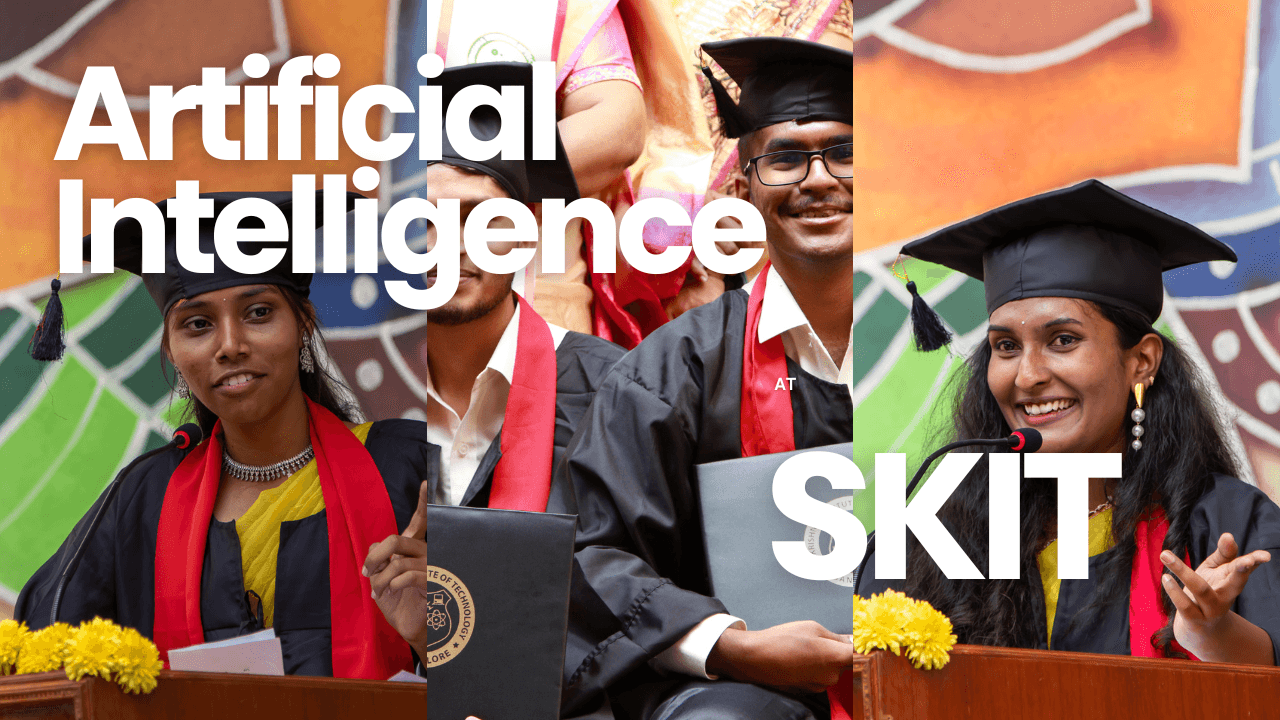
Study Artificial Intelligence at SKIT: Courses, Skills, Careers & How to Start
AI studies is a rapidly growing field that teaches you how to build intelligent systems capable of learning, reasoning, and solving problems—skills that companies across every industry are actively seeking. From healthcare diagnostics to financial fraud detection, the applications keep expanding.
This guide covers what you'll learn in AI courses, the skills you'll develop, career paths available after graduation, and how to choose the right program for your goals. Apply Now
What Are AI Studies
AI studies is a multidisciplinary field focused on creating intelligent machines that simulate human cognitive processes like learning, reasoning, and problem-solving. You might already interact with AI daily without realizing it when your phone recognizes your face, when Netflix suggests a show, or when Google translates a webpage instantly.
The field covers several interconnected areas:
Machine Learning & Neural Networks: Algorithms that learn patterns from data and make predictions, rather than following pre-written rules for every situation.
Generative AI & Large Language Models: Tools like ChatGPT that create text, images, and code by learning from massive datasets.
Applied AI & Robotics: Real-world applications in healthcare diagnostics, fraud detection, and self-driving vehicles.
AI Ethics & Policy: Examining bias in algorithms, responsible deployment, and the social impact of intelligent systems.
Most AI courses touch on several of these areas as you progress, though you can specialize later based on your interests.
Why Study Artificial Intelligence in Higher Education
Online tutorials can teach you syntax and basic concepts. However, a formal degree program offers something different—structured learning that builds concepts in the right sequence, mentorship from faculty who have worked in the field, and industry connections that matter when you're job hunting.
Growing Demand for AI Professionals
Companies across sectors are actively hiring AI talent with 16,000 AI job postings per month in late 2024. The shift isn't just about using AI tools anymore organizations want professionals who understand how intelligent systems work and can build custom solutions for specific problems.
Industries Hiring AI Talent
AI roles exist far beyond tech companies:
Healthcare: Diagnostic systems analyzing medical images and patient records
Finance: Fraud detection algorithms and automated trading platforms
Manufacturing: Predictive maintenance and quality control automation
Retail: Recommendation engines and customer behavior analytics
Technology: Product innovation and research
Career Growth and Salary Potential
AI roles consistently rank among the higher-paying positions in technology workers earn up to 25% more than those in similar technical areas without AI specialty. Entry-level positions offer competitive starting packages, and experienced professionals often advance to senior technical or leadership roles within a few years.
What You Learn in AI Courses and Training Programs
A well-designed AI curriculum balances foundational computing concepts with specialized topics. Here's what you can expect.
Programming and Data Structures
Python is the primary language for AI work, and you'll become quite comfortable with it. Beyond writing code, you'll learn to organize data using structures like arrays, trees, and graphs—the building blocks of every AI application.
Machine Learning and Deep Learning
Machine learning refers to algorithms that improve through experience with data. Deep learning takes this further using neural networks, which are computational systems loosely inspired by how the human brain processes information.
You'll work with frameworks like TensorFlow and PyTorch. Both are industry-standard tools for building and deploying AI models.
Natural Language Processing
NLP, or Natural Language Processing, focuses on helping machines understand and generate human language. Chatbots, translation services, and sentiment analysis tools that gauge public opinion from social media—all of these rely on NLP techniques.
Computer Vision and Image Processing
Computer vision teaches machines to interpret visual information. Applications include medical imaging analysis, security systems, and autonomous vehicle navigation.
Generative AI and Applications
Large Language Models have changed what's possible with AI. You'll learn how systems like GPT work and how to apply them for content creation, code generation, and automation tasks.
Cloud Computing and Data Analytics
Modern AI systems run on cloud infrastructure and require strong data handling skills. You'll learn to work with large datasets and understand the computational resources that power AI applications at scale.
Essential Skills You Gain from AI Classes
AI studies equip you with both technical abilities and transferable skills that employers value.
Technical and Programming Skills
Skill Area | What You'll Learn |
|---|---|
Python Programming | Core language for AI development |
Mathematics | Linear algebra, probability, statistics |
AI Frameworks | PyTorch, TensorFlow, scikit-learn |
Data Handling | Preprocessing, cleaning, analysis |
Analytical and Problem-Solving Abilities
AI training develops your capacity to break complex challenges into smaller, manageable pieces. You'll learn to think algorithmically—approaching problems in systematic ways that computers can execute.
Research and Innovation Competencies
You'll gain experience reading academic papers, designing experiments, and potentially contributing to publications. Research skills prepare you for industry R&D roles and further academic study.
AI Education Programs and Learning Pathways
Several routes can lead you into AI, each with distinct advantages.
Pathway | Duration | Best For | Credential |
|---|---|---|---|
Undergraduate Degree | 4 years | Comprehensive foundation | B.E./B.Tech |
Online Courses | Weeks to months | Skill upgrades | Certificate |
Combined Approach | 4+ years | Maximum employability | Degree + Certifications |
Undergraduate AI Degree Programs
A formal four-year program provides structured curriculum progression, laboratory access, faculty guidance, and placement support. VTU-affiliated programs follow established academic standards while incorporating industry-relevant content.
Online AI Courses and Certifications
Platforms like Coursera, edX, and Udacity offer courses ranging from beginner-friendly introductions like "AI for Everyone" to advanced specializations in deep learning. Online courses work well for supplementing formal education or for professional development.
Combining Formal Education with Online AI Courses
Many successful AI professionals pursue both paths. A degree provides depth and credentials, while online certifications demonstrate specialized skills and continuous learning to employers.
Prerequisites for Artificial Intelligence Classes
You might wonder what background you need before starting AI studies. The requirements are more accessible than many assume:
Educational background: 10+2 or equivalent with science and mathematics
Mathematics comfort: Basic algebra and statistics
Logical thinking: Ability to approach problems systematically
Prior coding: Often not required—many programs teach programming from scratch
If you're coming from a non-technical background, don't let that discourage you. Many AI programs are designed with beginners in mind.
Career Opportunities After AI Training Courses
Completing AI studies opens doors to diverse roles across industries.
Data Scientist
Data scientists analyze complex datasets to extract insights and build predictive models. The role bridges technical AI skills with business understanding.
Machine Learning Engineer
ML engineers design and deploy machine learning systems at scale openings for these specialists are set to grow by 40% in the next five years. The focus is on making models work reliably in production environments.
AI Research Scientist
Research scientists advance the field through original work. This path often involves publishing papers and developing new algorithms.
Computer Vision Engineer
Computer vision engineers specialize in visual AI applications like facial recognition, object detection, and medical image analysis.
Natural Language Processing Specialist
NLP specialists create language-based applications including chatbots, translation systems, and text analytics tools.
AI Product Manager
Product managers connect technical teams with business objectives. The role requires understanding both AI capabilities and market needs.
How Long Does It Take to Learn Artificial Intelligence Online and On Campus
Your timeline depends on your chosen path and goals:
Short certificates: A few weeks for foundational understanding
Specialization tracks: Several months for intermediate skills
Undergraduate degree: Four years for comprehensive expertise
Self-paced online options offer flexibility, though they may lack the structured depth and mentorship of formal programs.
How to Choose the Best AI Course for Your Goals
Consider these factors when evaluating programs:
Career objective: Research, industry applications, or entrepreneurship
Learning style: Structured classroom or self-paced study
Practical exposure: Labs, projects, and industry connections
Placement support: Internship opportunities and campus recruitment
Accreditation: Recognition by universities and professional bodies
Programs that align curriculum with Industry 4.0 demands and provide hands-on project experience with dedicated placement support tend to produce more job-ready graduates.
Begin Your AI Studies at SKIT Bangalore
SKIT's AIML program offers a VTU-affiliated four-year B.E. degree designed for Industry 4.0 demands. The program features specialized AI/ML laboratories, partnerships with Infosys Campus Connect, Springboard, and Tequed Labs, plus dedicated placement support.
The curriculum covers foundational programming through advanced topics like generative AI and cloud computing. Faculty members actively engage in research, and students regularly participate in hackathons, conferences, and industry projects.
Conclusion
AI studies represent one of the more promising educational paths available today. The field combines intellectual challenge with practical impact, and career opportunities continue to expand across industries.
Whether you're drawn to building intelligent systems, analyzing data, or researching new algorithms, a solid foundation in AI opens numerous doors. The key is choosing a program that balances theoretical depth with hands-on experience and industry connections.
FAQs about Artificial Intelligence Studies
Can I study AI without a computer science background?
Yes, many programs welcome students from science and mathematics backgrounds. Most AI courses teach programming fundamentals as part of the curriculum, so prior coding experience isn't always necessary.
What is the difference between AI and machine learning studies?
AI is the broader field of creating intelligent systems, while machine learning is a subset where algorithms learn from data. Most AI courses cover both since machine learning forms a core component of modern artificial intelligence.
Are AI certifications enough or do I need a formal degree?
Online certifications work well for skill upgrades and demonstrating specialized knowledge. However, a formal degree provides deeper foundations, faculty mentorship, and stronger placement support. Combining both approaches often yields the best outcomes.
What hands-on projects will I complete during AI studies?
Typical programs include projects in image classification, chatbot development, and predictive analytics using real datasets. Projects build your portfolio and demonstrate practical competence to potential employers.
How do I know if AI studies are right for me?
If you enjoy problem-solving, feel curious about technology, and are comfortable with logical thinking, AI may be a strong fit. Consider trying an introductory online course to test your interest before committing to a full program.
Study Artificial Intelligence at SKIT: Courses, Skills, Careers & How to Start
AI studies is a rapidly growing field that teaches you how to build intelligent systems capable of learning, reasoning, and solving problems—skills that companies across every industry are actively seeking. From healthcare diagnostics to financial fraud detection, the applications keep expanding.
This guide covers what you'll learn in AI courses, the skills you'll develop, career paths available after graduation, and how to choose the right program for your goals. Apply Now
What Are AI Studies
AI studies is a multidisciplinary field focused on creating intelligent machines that simulate human cognitive processes like learning, reasoning, and problem-solving. You might already interact with AI daily without realizing it when your phone recognizes your face, when Netflix suggests a show, or when Google translates a webpage instantly.
The field covers several interconnected areas:
Machine Learning & Neural Networks: Algorithms that learn patterns from data and make predictions, rather than following pre-written rules for every situation.
Generative AI & Large Language Models: Tools like ChatGPT that create text, images, and code by learning from massive datasets.
Applied AI & Robotics: Real-world applications in healthcare diagnostics, fraud detection, and self-driving vehicles.
AI Ethics & Policy: Examining bias in algorithms, responsible deployment, and the social impact of intelligent systems.
Most AI courses touch on several of these areas as you progress, though you can specialize later based on your interests.
Why Study Artificial Intelligence in Higher Education
Online tutorials can teach you syntax and basic concepts. However, a formal degree program offers something different—structured learning that builds concepts in the right sequence, mentorship from faculty who have worked in the field, and industry connections that matter when you're job hunting.
Growing Demand for AI Professionals
Companies across sectors are actively hiring AI talent with 16,000 AI job postings per month in late 2024. The shift isn't just about using AI tools anymore organizations want professionals who understand how intelligent systems work and can build custom solutions for specific problems.
Industries Hiring AI Talent
AI roles exist far beyond tech companies:
Healthcare: Diagnostic systems analyzing medical images and patient records
Finance: Fraud detection algorithms and automated trading platforms
Manufacturing: Predictive maintenance and quality control automation
Retail: Recommendation engines and customer behavior analytics
Technology: Product innovation and research
Career Growth and Salary Potential
AI roles consistently rank among the higher-paying positions in technology workers earn up to 25% more than those in similar technical areas without AI specialty. Entry-level positions offer competitive starting packages, and experienced professionals often advance to senior technical or leadership roles within a few years.
What You Learn in AI Courses and Training Programs
A well-designed AI curriculum balances foundational computing concepts with specialized topics. Here's what you can expect.
Programming and Data Structures
Python is the primary language for AI work, and you'll become quite comfortable with it. Beyond writing code, you'll learn to organize data using structures like arrays, trees, and graphs—the building blocks of every AI application.
Machine Learning and Deep Learning
Machine learning refers to algorithms that improve through experience with data. Deep learning takes this further using neural networks, which are computational systems loosely inspired by how the human brain processes information.
You'll work with frameworks like TensorFlow and PyTorch. Both are industry-standard tools for building and deploying AI models.
Natural Language Processing
NLP, or Natural Language Processing, focuses on helping machines understand and generate human language. Chatbots, translation services, and sentiment analysis tools that gauge public opinion from social media—all of these rely on NLP techniques.
Computer Vision and Image Processing
Computer vision teaches machines to interpret visual information. Applications include medical imaging analysis, security systems, and autonomous vehicle navigation.
Generative AI and Applications
Large Language Models have changed what's possible with AI. You'll learn how systems like GPT work and how to apply them for content creation, code generation, and automation tasks.
Cloud Computing and Data Analytics
Modern AI systems run on cloud infrastructure and require strong data handling skills. You'll learn to work with large datasets and understand the computational resources that power AI applications at scale.
Essential Skills You Gain from AI Classes
AI studies equip you with both technical abilities and transferable skills that employers value.
Technical and Programming Skills
Skill Area | What You'll Learn |
|---|---|
Python Programming | Core language for AI development |
Mathematics | Linear algebra, probability, statistics |
AI Frameworks | PyTorch, TensorFlow, scikit-learn |
Data Handling | Preprocessing, cleaning, analysis |
Analytical and Problem-Solving Abilities
AI training develops your capacity to break complex challenges into smaller, manageable pieces. You'll learn to think algorithmically—approaching problems in systematic ways that computers can execute.
Research and Innovation Competencies
You'll gain experience reading academic papers, designing experiments, and potentially contributing to publications. Research skills prepare you for industry R&D roles and further academic study.
AI Education Programs and Learning Pathways
Several routes can lead you into AI, each with distinct advantages.
Pathway | Duration | Best For | Credential |
|---|---|---|---|
Undergraduate Degree | 4 years | Comprehensive foundation | B.E./B.Tech |
Online Courses | Weeks to months | Skill upgrades | Certificate |
Combined Approach | 4+ years | Maximum employability | Degree + Certifications |
Undergraduate AI Degree Programs
A formal four-year program provides structured curriculum progression, laboratory access, faculty guidance, and placement support. VTU-affiliated programs follow established academic standards while incorporating industry-relevant content.
Online AI Courses and Certifications
Platforms like Coursera, edX, and Udacity offer courses ranging from beginner-friendly introductions like "AI for Everyone" to advanced specializations in deep learning. Online courses work well for supplementing formal education or for professional development.
Combining Formal Education with Online AI Courses
Many successful AI professionals pursue both paths. A degree provides depth and credentials, while online certifications demonstrate specialized skills and continuous learning to employers.
Prerequisites for Artificial Intelligence Classes
You might wonder what background you need before starting AI studies. The requirements are more accessible than many assume:
Educational background: 10+2 or equivalent with science and mathematics
Mathematics comfort: Basic algebra and statistics
Logical thinking: Ability to approach problems systematically
Prior coding: Often not required—many programs teach programming from scratch
If you're coming from a non-technical background, don't let that discourage you. Many AI programs are designed with beginners in mind.
Career Opportunities After AI Training Courses
Completing AI studies opens doors to diverse roles across industries.
Data Scientist
Data scientists analyze complex datasets to extract insights and build predictive models. The role bridges technical AI skills with business understanding.
Machine Learning Engineer
ML engineers design and deploy machine learning systems at scale openings for these specialists are set to grow by 40% in the next five years. The focus is on making models work reliably in production environments.
AI Research Scientist
Research scientists advance the field through original work. This path often involves publishing papers and developing new algorithms.
Computer Vision Engineer
Computer vision engineers specialize in visual AI applications like facial recognition, object detection, and medical image analysis.
Natural Language Processing Specialist
NLP specialists create language-based applications including chatbots, translation systems, and text analytics tools.
AI Product Manager
Product managers connect technical teams with business objectives. The role requires understanding both AI capabilities and market needs.
How Long Does It Take to Learn Artificial Intelligence Online and On Campus
Your timeline depends on your chosen path and goals:
Short certificates: A few weeks for foundational understanding
Specialization tracks: Several months for intermediate skills
Undergraduate degree: Four years for comprehensive expertise
Self-paced online options offer flexibility, though they may lack the structured depth and mentorship of formal programs.
How to Choose the Best AI Course for Your Goals
Consider these factors when evaluating programs:
Career objective: Research, industry applications, or entrepreneurship
Learning style: Structured classroom or self-paced study
Practical exposure: Labs, projects, and industry connections
Placement support: Internship opportunities and campus recruitment
Accreditation: Recognition by universities and professional bodies
Programs that align curriculum with Industry 4.0 demands and provide hands-on project experience with dedicated placement support tend to produce more job-ready graduates.
Begin Your AI Studies at SKIT Bangalore
SKIT's AIML program offers a VTU-affiliated four-year B.E. degree designed for Industry 4.0 demands. The program features specialized AI/ML laboratories, partnerships with Infosys Campus Connect, Springboard, and Tequed Labs, plus dedicated placement support.
The curriculum covers foundational programming through advanced topics like generative AI and cloud computing. Faculty members actively engage in research, and students regularly participate in hackathons, conferences, and industry projects.
Conclusion
AI studies represent one of the more promising educational paths available today. The field combines intellectual challenge with practical impact, and career opportunities continue to expand across industries.
Whether you're drawn to building intelligent systems, analyzing data, or researching new algorithms, a solid foundation in AI opens numerous doors. The key is choosing a program that balances theoretical depth with hands-on experience and industry connections.
FAQs about Artificial Intelligence Studies
Can I study AI without a computer science background?
Yes, many programs welcome students from science and mathematics backgrounds. Most AI courses teach programming fundamentals as part of the curriculum, so prior coding experience isn't always necessary.
What is the difference between AI and machine learning studies?
AI is the broader field of creating intelligent systems, while machine learning is a subset where algorithms learn from data. Most AI courses cover both since machine learning forms a core component of modern artificial intelligence.
Are AI certifications enough or do I need a formal degree?
Online certifications work well for skill upgrades and demonstrating specialized knowledge. However, a formal degree provides deeper foundations, faculty mentorship, and stronger placement support. Combining both approaches often yields the best outcomes.
What hands-on projects will I complete during AI studies?
Typical programs include projects in image classification, chatbot development, and predictive analytics using real datasets. Projects build your portfolio and demonstrate practical competence to potential employers.
How do I know if AI studies are right for me?
If you enjoy problem-solving, feel curious about technology, and are comfortable with logical thinking, AI may be a strong fit. Consider trying an introductory online course to test your interest before committing to a full program.